Why the Slow Things Are Quietly Winning
For years, faster seemed to be the obvious direction of progress. Faster internet. Faster delivery. Faster food. Faster communication. Faster entertainment. Faster ways to become productive, fit, informed, successful, and apparently better at being alive. If something could be reduced from an hour to ten minutes, or from ten minutes to one click, it usually was.
By Arturo Branch on September 11, 2026
Getty Images
For years, faster seemed to be the obvious direction of progress.
Faster internet. Faster delivery. Faster food. Faster communication. Faster entertainment. Faster ways to become productive, fit, informed, successful, and apparently better at being alive. If something could be reduced from an hour to ten minutes, or from ten minutes to one click, it usually was.
And much of that progress has been genuinely useful. Nobody needs to romanticize waiting three weeks for a letter or spending an afternoon doing something a computer can finish in seconds.
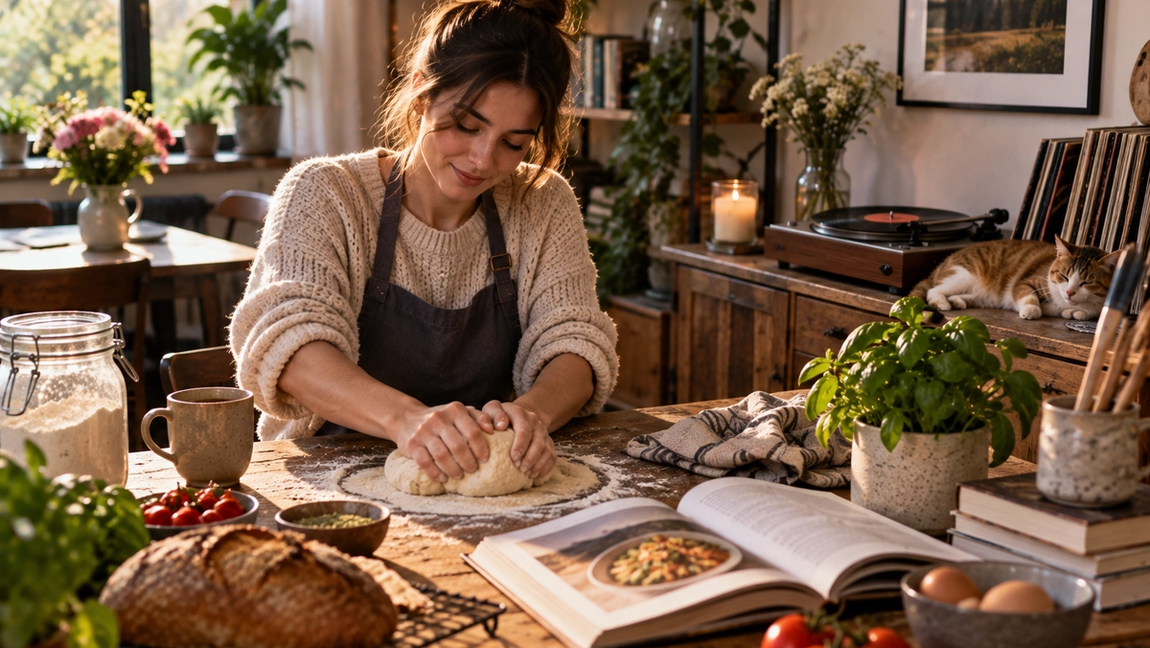
But something interesting is happening alongside all that speed. People are rediscovering activities that refuse to be rushed. They are baking bread, buying vinyl records, growing vegetables, reading physical books, taking long walks, knitting, journaling by hand, cooking from scratch, and traveling in ways that prioritize staying somewhere rather than checking off as many destinations as possible.
The slow things haven’t disappeared.
In some corners of life, they’re quietly becoming more valuable precisely because everything else has become so fast.
Speed stopped feeling like a luxury
Convenience once felt extraordinary.
Having almost any song available instantly was incredible. Getting a package the next day felt futuristic. Being able to contact someone on the other side of the world in seconds changed human communication.
Then we got used to it.
What was once impressive became the minimum expectation.
A webpage taking five seconds to load now feels broken. A message left unanswered for a few hours can make us wonder what’s wrong. Waiting several days for delivery feels strangely primitive.
The problem is that once speed becomes normal, it stops creating satisfaction.
Instead, slowness starts becoming noticeable.
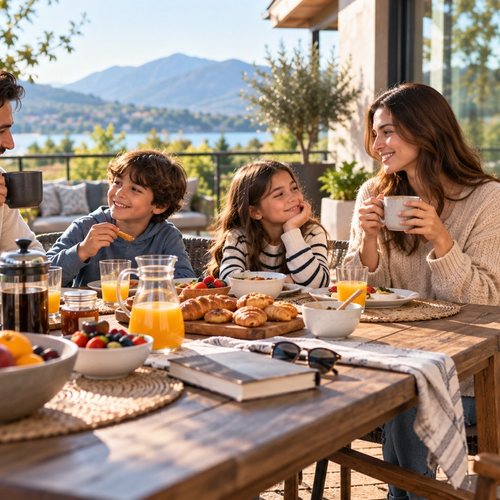
A two-hour dinner where nobody is rushing feels luxurious. Spending an afternoon wandering without checking the time feels unusual. Reading a book for an hour without switching to another screen can feel almost radical.
Scarcity creates value.
And uninterrupted time has become scarce.
Slow things demand your attention
Many fast experiences are designed to require as little effort as possible.
Tap, swipe, scroll, skip.
If something doesn’t interest you within seconds, another option is waiting.
Slow activities behave differently.
A novel may need 50 pages before it pulls you in. Cooking something properly can take hours. Gardening might require months before anything appears. Learning an instrument can require years before you sound remotely like the person you imagined becoming.
These activities ask you to stay.
That can initially feel frustrating because our attention has become accustomed to constant novelty.
But staying with something produces a different kind of satisfaction from consuming something quickly.
You aren’t simply receiving an experience.
You’re participating in it.
Physical things are becoming interesting again
Digital technology was supposed to make many physical objects unnecessary.
And technically, it did.
A phone can replace a camera, map, newspaper, notebook, music player, calendar, calculator, television, and bookshelf.
Yet physical versions of many of those things haven’t completely disappeared.
People still buy printed books when an entire library can fit on a tablet. Vinyl records have found new audiences despite being dramatically less convenient than streaming. Paper notebooks survive despite endless note-taking apps.
Why?
Partly because physical objects create boundaries.
A printed book does one thing. It doesn’t receive notifications halfway through chapter six. A record encourages you to listen to an album rather than jumping between songs every 40 seconds. Writing in a notebook doesn’t tempt you to check your email.
The limitation becomes part of the appeal.
Sometimes less functionality creates more attention.
Craftsmanship feels different in an automated world
The easier it becomes to produce things quickly, the more noticeable human effort becomes.
A handmade table carries evidence of someone’s time. So does a knitted sweater, a carefully prepared meal, a handwritten letter, or a photograph developed using an old process.
The object doesn’t necessarily perform its function better.
A factory-made mug may hold coffee just as successfully as one made by a potter.
But we’re not only responding to function.
We’re responding to effort, variation, story, and evidence that another person spent part of their finite life making something.
Automation makes identical objects easier to produce.
That can make imperfection more interesting.
A tiny irregularity that would once have been considered a manufacturing flaw can become proof that a human being was involved.
Waiting can make things feel more valuable
Instant access has removed anticipation from many parts of life.
If you want to watch a television series, you may be able to watch the entire season tonight. If you want a product, it may arrive tomorrow. If you want to hear a song, you can play it immediately.
Convenient? Absolutely.
But anticipation has its own pleasure.
Waiting a week for the next episode gives people time to discuss what happened. Planning a trip months in advance allows excitement to build. Cooking something slowly fills the house with smells before anyone sits down to eat.
The experience begins before the thing itself arrives.
Not every delay is wonderful, obviously. Nobody becomes spiritually enriched waiting three hours at the airport because a flight has been canceled.
But chosen waiting is different from imposed waiting.
When we deliberately allow something to take time, anticipation can become part of the reward.
Slow hobbies give us something algorithms can’t finish for us
Modern technology is increasingly good at removing effort.
Software can correct our writing, edit photographs, recommend music, generate images, plan routes, summarize documents, and automate repetitive tasks.
That’s enormously useful.
But when machines make outcomes easier to obtain, the process itself can become more important.
You can buy bread in minutes, yet people spend hours baking it. You can buy a sweater, yet people knit one over several weeks. You can take thousands of perfect digital photographs, yet some photographers deliberately use film.
They’re not necessarily choosing the efficient route.
Efficiency isn’t the goal.
The doing is the goal.
A hobby doesn’t have to justify itself through productivity. Sometimes the fact that it takes time is precisely what gives it meaning.
Slow travel can feel bigger than fast travel
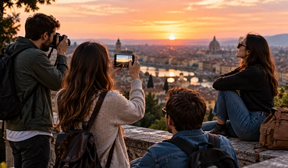
Modern travel makes it possible to collect destinations at extraordinary speed.
Three cities in four days. Seven countries in two weeks. Breakfast in one place, dinner somewhere else, and tomorrow another airport.
It can be exciting.
It can also leave you remembering mostly train stations.
Slow travel reverses the objective. Instead of asking how much you can see, you ask how deeply you can experience one place.
Stay long enough to have a favorite café. Walk the same street more than once. Go somewhere that isn’t on the top-ten list. Spend an afternoon doing nothing particularly important.
You may technically see fewer things.
But you might remember more.
There is a difference between visiting a place and briefly occupying its coordinates.
Slow relationships are surviving the swipe era
Technology has made meeting and communicating with people easier than ever.
It has also encouraged us to evaluate people quickly.
Profiles are scanned in seconds. Messages are answered instantly or forgotten. Social feeds give us fragments of hundreds of people’s lives.
But the relationships that matter most still develop at an inconveniently human pace.
Trust takes time.
Friendship takes repetition.
Intimacy requires enough shared experience for someone to become more than the version of themselves they can present in a profile or conversation.
There isn’t really an efficient shortcut.
You can accelerate introductions.
You can’t automate history.
Slowness can be a form of control
Much of modern speed isn’t actually chosen by us.
We hurry because something is demanding our attention. Notifications arrive. Deadlines multiply. Messages expect answers. Platforms continuously offer another thing to watch.
Slowing down can therefore feel less like laziness and more like reclaiming control.
You decide that the email can wait until morning. You walk somewhere instead of driving because you have time. You cook dinner without trying to finish it as quickly as possible. You spend an afternoon with one person instead of maintaining twelve conversations simultaneously.
The point isn’t to make everything slow.
Some things should absolutely be fast.
Emergency rooms should be fast. Internet connections should be fast. Customer service lines could certainly hurry up.
The goal is distinguishing between speed that improves life and speed that simply makes life feel rushed.
The future probably isn’t slower
Technology isn’t suddenly going to reverse direction.
Things will become faster, more automated, more immediate, and more personalized. Tasks that currently take hours may eventually take seconds.
That’s exactly why slow experiences may become more precious.
When almost anything can be delivered instantly, waiting becomes unusual. When content is infinite, giving one thing your complete attention becomes meaningful. When machines can produce perfect outputs immediately, spending months learning to make something imperfect yourself can feel strangely satisfying.
The slow things aren’t winning because the fast world failed.
They’re winning because the fast world succeeded so completely that it reminded us of something.
Not everything valuable is valuable because it saves time.
Some things are valuable because of the time we give them.