Why the World Feels Faster Than Ever (And What to Do About It)
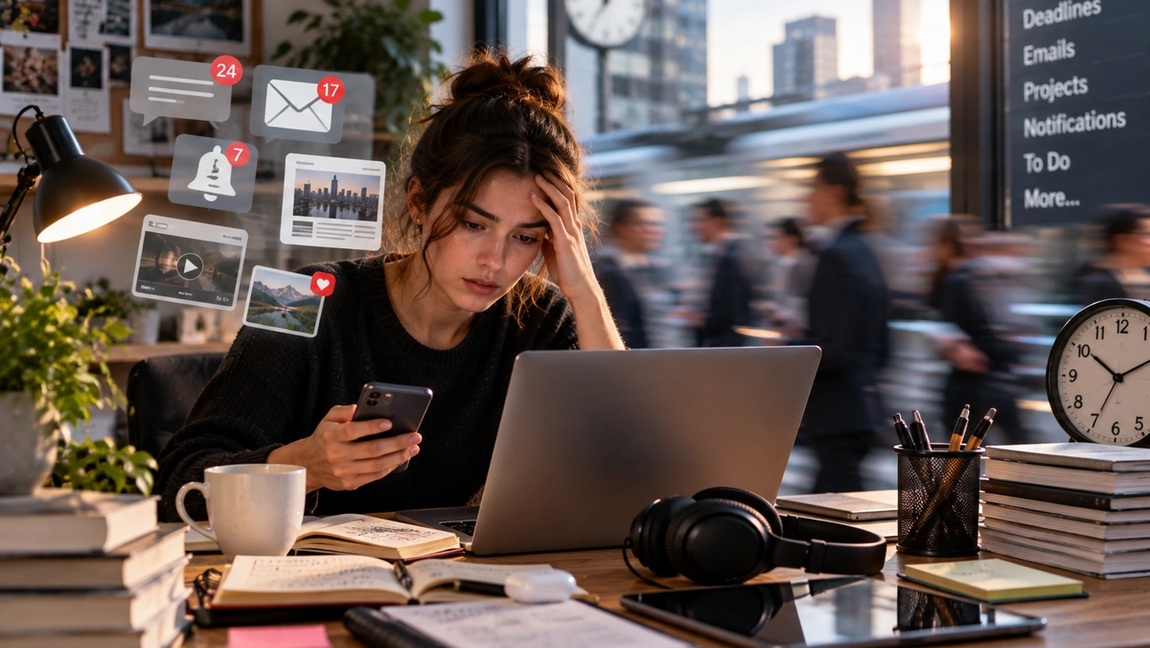
It is possible to wake up, check the weather, read three messages, see breaking news from another continent, watch half a dozen videos, answer an email, check your bank account, and learn that a celebrity you haven’t thought about in ten years is getting divorced—all before getting out of bed.
By Mekhi Hensley on September 11, 2026
Getty Images
It is possible to wake up, check the weather, read three messages, see breaking news from another continent, watch half a dozen videos, answer an email, check your bank account, and learn that a celebrity you haven’t thought about in ten years is getting divorced—all before getting out of bed.
Nothing about the human brain evolved for this particular kind of morning.
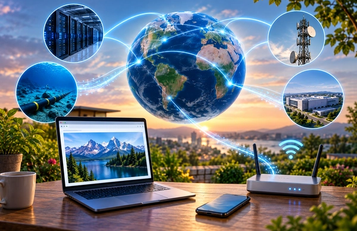
Modern life hasn’t just become faster in the obvious ways. Planes move faster, messages arrive instantly, and information travels around the world in seconds. More importantly, the number of things competing for our attention has exploded.
A person can experience more updates during breakfast than previous generations might have encountered in an entire day. Work follows us home. Entertainment never runs out. News never really ends. Everyone is reachable, and increasingly, everyone expects everyone else to be reachable too.
No wonder time feels strange.
The solution isn’t necessarily escaping to a cabin without Wi-Fi. It’s learning where modern speed genuinely improves life and where it quietly begins controlling it.
Everything arrives immediately now
Waiting used to be built into ordinary life.
Letters took days. Photographs had to be developed. Television programs aired at specific times. If a shop was closed, you came back tomorrow. If you didn’t know something, you might remain unaware until you found someone who did.
Most of those inconveniences are not worth mourning.
Instant access is enormously useful.
The problem is that expectations changed alongside the technology. Once something can happen instantly, we begin assuming it should happen instantly.
A message arrives and feels as though it requires an immediate response. A webpage takes a few seconds to load and we become impatient. A package arriving next week somehow feels slow.
Technology didn’t simply accelerate services.
It accelerated our definition of normal.
There is no natural end to the internet
Older forms of media usually ended.
The newspaper had a final page. The television program finished. The album ran out of songs. The magazine could be read from front to back.
The internet has no equivalent.
There is always another post, another article, another video, another episode, another headline, another notification.
You don’t finish scrolling.
You stop.
That distinction matters because the responsibility for ending the experience has moved from the medium to the person using it.
When content is effectively infinite, “I’ll stop when I’m done” doesn’t work particularly well.
You’re never done.
At some point, you simply have to decide that you’ve had enough.
Work lost some of its physical boundaries
There was once a useful feature built into many jobs: you had to leave the workplace.
You physically went somewhere else.
For many people, technology weakened that boundary. Email lives in your pocket. Workplace messaging apps come home. Remote work can mean the same table is where you eat breakfast, answer emails, attend meetings, and watch Netflix later.
This flexibility can be wonderful.
It can also make work feel permanently unfinished.
There’s always one more message you could answer.
One more document you could check.
One more thing you could quickly finish before bed.
When work has no physical closing time, you may need to create a psychological one.
Otherwise, the working day doesn’t exactly end.
It gradually fades into the evening.
We experience too many lives at once
For most of human history, people knew what was happening primarily within a relatively small social circle.
Now you can know what hundreds of people are doing every day.
Someone got promoted. Someone is traveling through Japan. Someone bought a house. Someone ran a marathon. Someone started a company. Someone got married. Someone is having a spectacular lunch in Barcelona.
Your brain receives all of these events almost simultaneously.
This can create the strange feeling that everyone is constantly moving forward while you’re standing still.
But you’re comparing one life—your own—with highlights collected from hundreds of other lives.
Nobody individually is doing everything you’re seeing.
Your feed simply assembles everyone else’s activity into one impossible super-person who is apparently getting married, climbing Everest, launching a business, and making homemade sourdough this weekend.
Don’t compete with that person.
They don’t exist.
Constant switching makes days feel fragmented
You begin writing something.
A notification arrives.
You check it.
That reminds you of an email.
While answering the email, you remember something you need to search.
Twenty minutes later, you’re reading about a completely unrelated subject and vaguely wondering what you were originally doing.
This kind of switching makes us feel busy because the brain is constantly active.
But activity isn’t the same as progress.
Fragmented attention also changes our experience of time. Instead of spending an hour doing one memorable thing, we spend an hour touching 25 different things briefly.
The hour becomes difficult to remember because nothing occupied it fully.
Create places where speed isn’t invited
You don’t need to slow your entire life down.
Choose specific areas where urgency isn’t allowed to dominate.
Dinner can be one.
A morning walk can be another.
Maybe your bedroom doesn’t need work email. Perhaps Sunday morning stays free from news. Maybe the first 20 minutes after waking don’t belong to your phone.
These boundaries work because they’re concrete.
“Use technology less” is vague.
“No phone at the dinner table” is clear.
The goal isn’t to prove that you can live without technology.
It’s to create parts of the day where your nervous system isn’t waiting for the next interruption.
Stop treating every notification equally
A phone notification has an interesting psychological effect.
Whether it’s an emergency or a shoe company announcing 15 percent off, the device makes approximately the same demand:
Look at me.
You don’t need most information at the exact moment it becomes available.
Turn off notifications that don’t deserve immediate access to you. Let apps wait until you choose to open them.
This small change reverses an important relationship.
Instead of information deciding when you receive it, you decide when you want information.
The world continues functioning.
You simply stop allowing every app you’ve ever installed to knock on the door whenever it feels like it.
Do one thing at normal speed
Try occasionally refusing to optimize an activity.
Walk without listening to anything.
Cook without simultaneously watching a video.
Drink coffee without checking messages.
Read ten pages without switching apps.
Have a conversation without putting your phone on the table.
At first, doing one thing can feel strangely inefficient.
That’s revealing.
We’ve become so accustomed to layering activities that simply listening to music can feel as though we’re wasting an opportunity to accomplish something else.
But not every minute needs to produce maximum output.
Some minutes can simply be experienced.
Put empty space back into the calendar
A completely full calendar can look efficient.
It can also make life incredibly fragile.
If every hour is allocated, one delayed meeting, sick child, traffic jam, or unexpected phone call can throw the entire day into chaos.
Margin matters.
Leave some evenings unplanned. Avoid scheduling activities back-to-back when you can. Give yourself longer than the theoretically minimum amount of time required to get somewhere.
Empty space isn’t wasted time.
It’s what prevents ordinary unpredictability from becoming an emergency.
A life with no margin will always feel faster because you’re constantly trying to catch up with it.
Give important things more time than convenient things
Modern systems are extremely good at making low-value activities effortless.
You can spend an hour scrolling almost accidentally.
Meaningful activities often require more intention.
Calling a friend requires deciding to call. Reading requires opening the book. Exercise requires beginning. A proper conversation requires staying. A hobby requires setting aside time.
If you don’t deliberately protect those activities, convenient entertainment will happily consume the gaps.
This is why slowing down isn’t really about doing everything slowly.
It’s about deciding which things deserve uninterrupted time.
You probably don’t need to keep up with everything
Perhaps the biggest source of modern speed is the belief that we’re supposed to remain current.
Current with news.
Current with culture.
Current with trends.
Current with messages.
Current with everyone we know.
But the amount of information available has exceeded any individual’s ability to follow it.
Something will happen without you knowing.
A show will become popular that you haven’t watched. A conversation will occur online without your participation. A news story will develop while you’re asleep.
That’s okay.
You aren’t falling behind.
There is no finish line where a perfectly informed person finally catches up with the internet.
A slower life doesn’t have to be a smaller life
Slowing down is sometimes presented as retreat: delete everything, move somewhere rural, grow vegetables, and communicate exclusively through handwritten letters.
That can be lovely if you want it.
But you don’t have to reject modern life to resist its speed.
Use the fast train.
Order the package online.
Send the instant message.
Take advantage of technology when it genuinely gives you time back.
Then be careful what happens to the time you saved.
Because efficiency has a strange habit of creating empty space and immediately filling it with more activity.
The world probably isn’t going to slow down for us.
Technology will become faster. Information will become more abundant. More things will compete for our attention.
So the important skill isn’t learning how to keep up.
It’s learning when not to.
The world can move quickly around you without requiring every part of your life to move at the same speed.